
Why Go to Ayutthaya?
Ayutthaya is a world famous UNESCO World Heritage Site. If you want to learn a little history of ancient Thailand, see its former capital, or if you just want to see some amazing ancient temples, Ayutthaya represents a treasure trove of information and sightseeing. Just over an hour north of Bangkok by train, (or if you’re unlucky, 2-3 hours – Thai trains run on their own time), Ayutthaya makes for a great day trip if you want to get away from the bustle of the big city.
How to Get To Ayutthaya
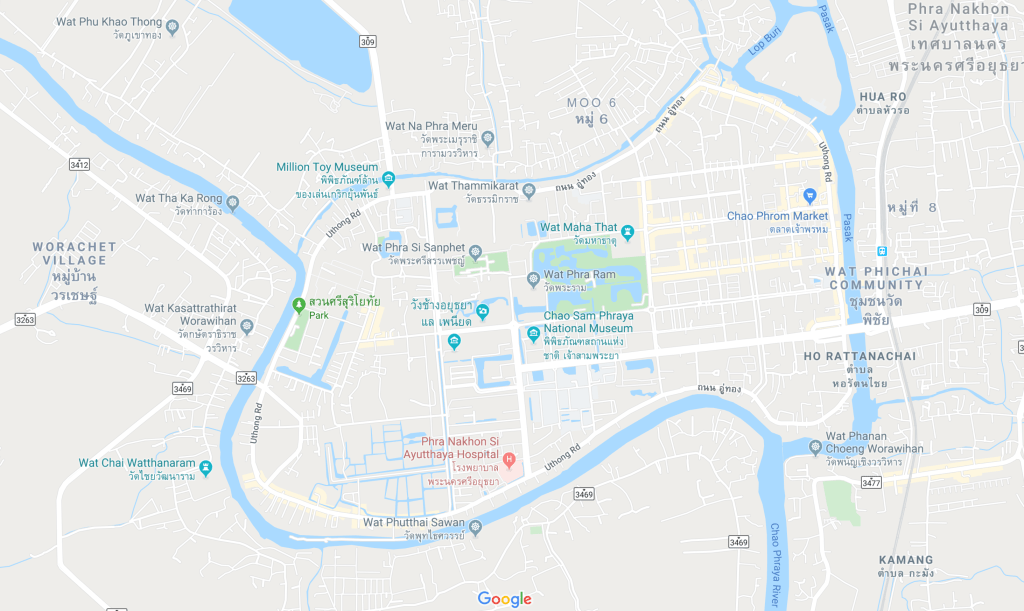
There are two easy options to get to Ayutthaya.
Train: I personally took the train and rode first class on the way there (around 400 Baht) and took the 3rd class on the way back (20 Baht). It took only a little over an hour for me to get there with a nice comfy seat, but on the way back it took about 2 hours and was standing room only. More information on train times and prices from Bangkok can be found here: https://thailandtrains.com/train-times-tickets-bangkok-to-ayutthaya/
Bus: The buses from Mo Chit station run about every twenty minutes to Ayutthaya. It will be hard to find a real timetable, but should not be too difficult to get a ride once you get to the bus station. Expect to pay 50-100 baht each way.
Boat: There are boat rides up the Chao Phraya River, but none of these are public. If you are dead set on a boat trip, you will need to book a private tour in advance.
How to Get Around in Ayutthaya
Bicycle (preferred method): I very much preferred renting a bicycle to get around Ayutthaya. Most of Ayutthaya is walkable, but having a bicycle made my expedition much more expeditious. There are bike racks at every temple to keep a bike safe when exploring the grounds, so no need to worry. Also, where I rented a bike they provided me with a bit of info on what to see, and gave me a free map!
Walking: As stated you can get around the city by walking, but you will be spending lots of extra time walking between temples, and it will take a extra little effort to get to some of the father destinations.
Tuk Tuk: If you’re anything like me you try to stay away from tuk tuks as much as possible. If you’re not like me, and need that sweet sweet tuk tuk ride, there are always drivers ready to take your money as soon as you step off the bus or the train. Just be ready to negotiate.
Private Tour: If you’re looking to spend a bit extra, there are multiple locations that offer private tours in Bangkok and can be arranged by your hotel or hostel. Also if you find a tuk tuk driver with good enough English (and that you can trust – good luck!), you can negotiate to have them give you a tour for the day, but be ready to pay them extra!
What to See
Before we start, I will mention that taking a trip to the Ayutthaya Tourist Office will give you a quick glimpse into the history of the city, and they have free maps if you need them.
Wat Phra Mahathat / The Temple of the Great Relic
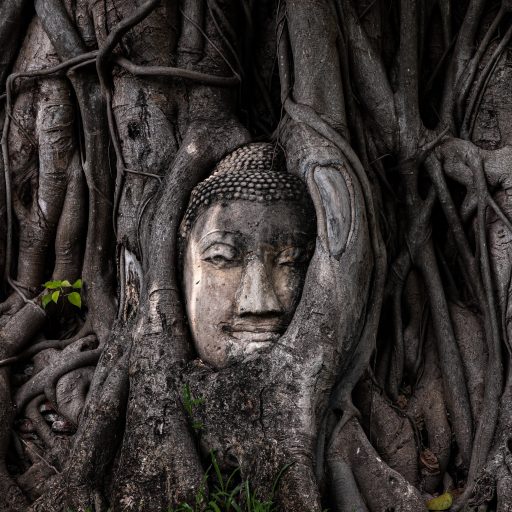
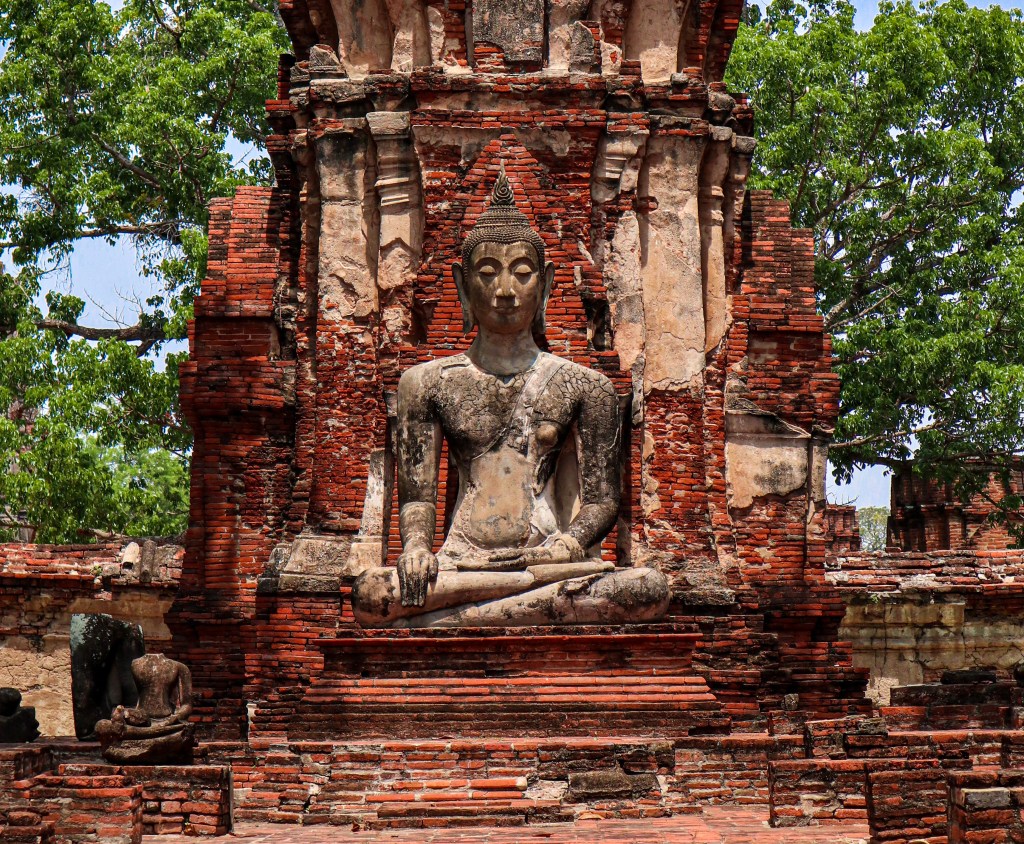
Built in 1374, Wat Phra Mahathat is probably the most visited temple in Ayutthaya, and for good reason. In addition to its very famous and photogenic Buddha head entertwined in roots pictured above, there includes the remains of a massive central prang (tower like structure), a large viharn (sermon hall) and sizeable ubosot (ordination hall). The area also includes a number of subsidiary chedis (another word for stupa or shrine) and viharns still standing and a few Buddha statues fully intact. A trip around the temple could take around 30-45 minutes, unless, like me, you take hundreds of photos and like to read in on the history of the buildings.

Wat Phra Si Sanphet / The Grand Palace Temple
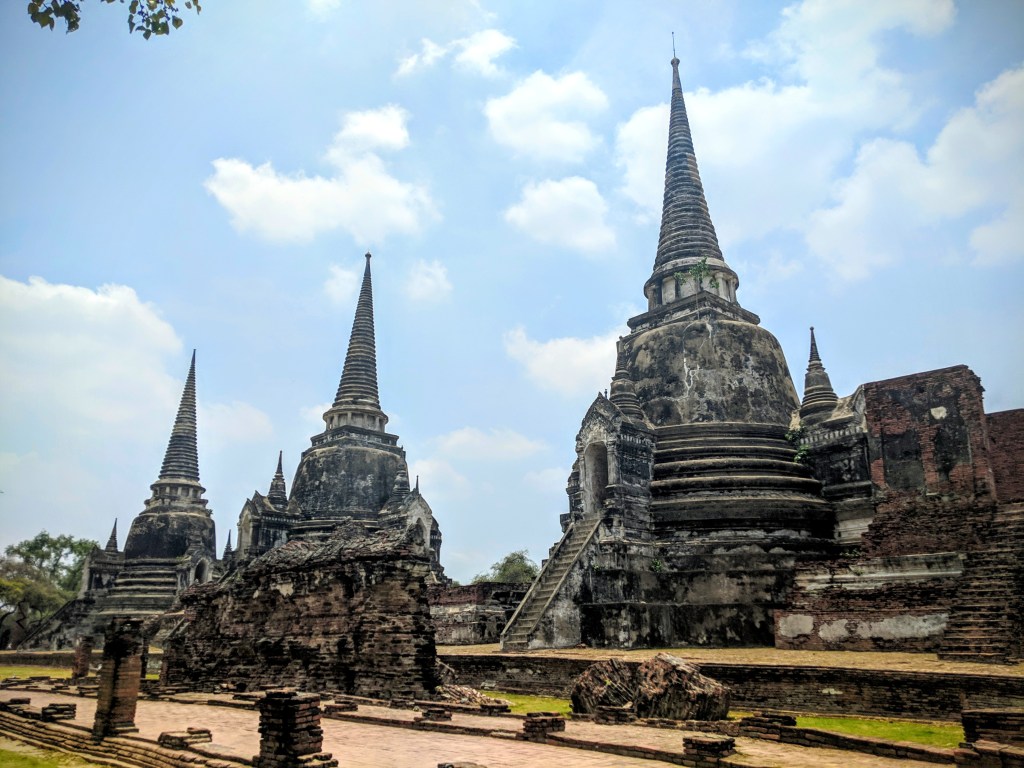
Constructed in the mid 1300s, Wat Phra Si Sanphet was the holiest of temples in Ayutthaya. It consists of three massive chedis lined East to West, with a massive viharn on side and a robust ubosot on the other, along with multiple smaller satellite viharns, ubosots, and prangs. The Wat was once the largest temple in the ancient capital, and before Ayutthaya was razed by a Burmese invasion in the 1750s, Wat Phra Si Sanphet housed a Buddha clad in 340 kilos (750 pounds) of gold. The gold was subsequently melted down and sent back to Burma, and its bronze core now sits inside a chedi after it was relocated to Wat Pho in Bangkok. It was the temple of the royal family, therefore (go figure) monks did not live there, and the The Wat was exclusively used for royal ceremonies.
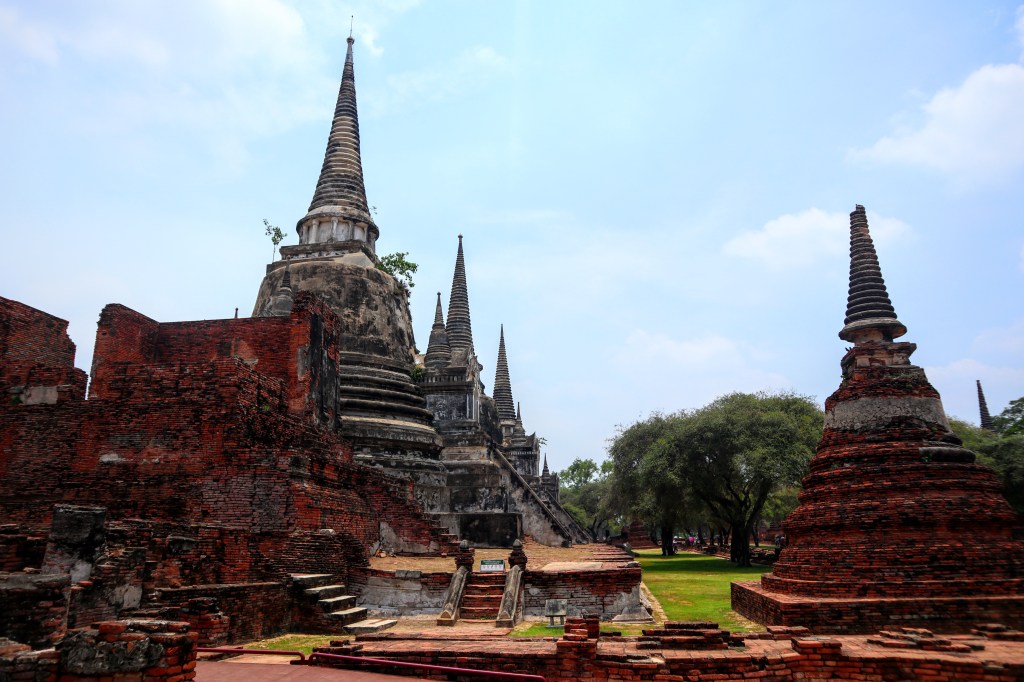
Wat Chaiwattaranaram
Commissioned in 1630 by King Prasat Thong, Wat Chaiwattaranaram offers eight smaller merus (chedis used as crematorium for some royal figures) connected by covered galleries, and four small prangs surrounding a large beautiful central prang, all of which are constructed in the traditional Khmer style.
The merus were adorned with pictures telling Jataka tales (the stories that tell the previous lives of the Buddha). As in those days people could not read, the teachings of the Buddha were taught using pictures. The temple has been going through reconstruction efforts since 2011 due to flooding.
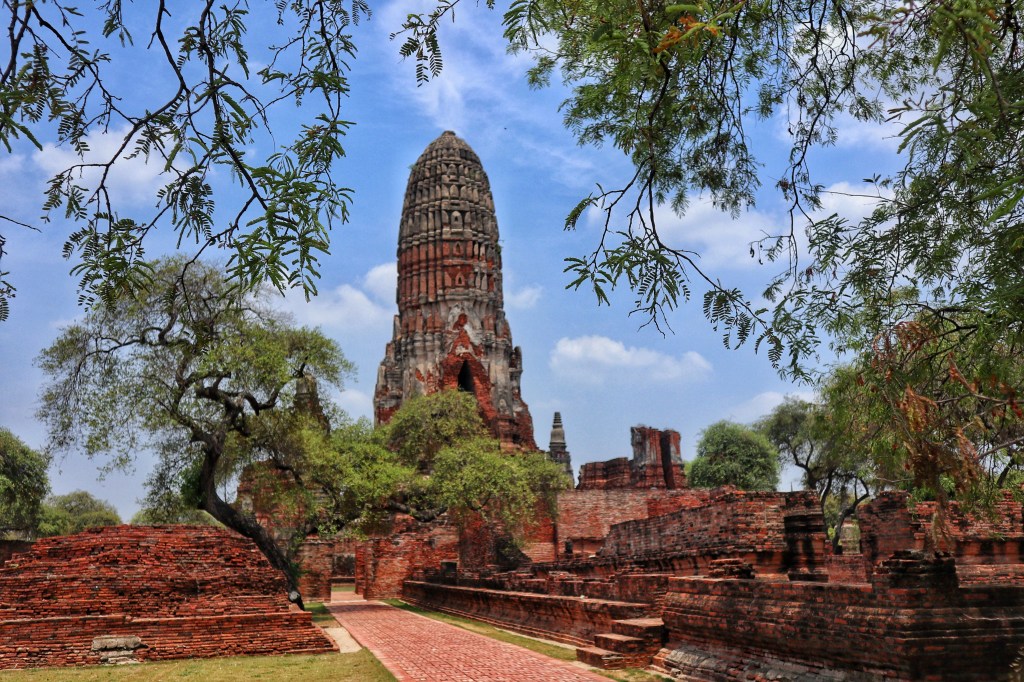
Wat Phutthaisawan
Completed in 1353, Wat Phutthaisawan hosts an impressive central prang, and luckily is one of the few temples that survived relatively unscathed during the 1750s Burmese invasion.
As Wat Phutthaisawan is located on the other side of the Chao Phraya River and there are no close bridges, getting there can take a bit of an extra effort (and is therefore a little less crowded). As the temperature was over 41°C (106°F) I decided the extra few miles of biking were not for me, but if you are there on a good day, the trip could be really worth it!
Temple Fees
All of the major temples have have admission fees. Expect to pay 50 baht for major temples in Ayutthaya and 20 baht for the less visited ones.
As always, be respectful of the monuments you’re visiting and enjoy your trip!
It is better to travel well than to arrive.
Buddha
 Guru Hikes
Leave a comment